|
Exumian
History & Culture
A Little History
Of
the 365 islands, only a few dozen have permanent residents, and only 3,500
residents call the islands home. The Upper Cays feature The Exuma Land
and Sea Park, Thunderball grotto (from James Bond movie, Thunderball),
and several small settlements connected by the weekly arrival of the mail
& supply boat. The great majority of the residents live on Great Exuma
and Little Exuma, joined by a small bridge, at the Southern end of the
chain.
It
is on these two islands where Loyalist settlers, driven from the US after
the Revolutionary War, attempted to transplant their cotton culture to
the tropics, bringing in slaves, building plantations, and cultivating
the sparce soil. When the soil gave out, the chenile bug devastated the
crops, Emancipation freed the slaves, and Europe found better grades of
cotton in Egypt, many of the Loyalist families called it quits and left
their land grants to their former slaves. Today, it is estimated that
about a third of the land on Great & Little Exuma is held in "Commonage"
by the descendants of those slaves.
Great Exuma,
Little Exuma & George Town
Great Exuma is about 35 miles long and ranges from 2-8 miles wide. The
Tropic of Cancer runs directly through it, giving the island a very tropical
feeling. The South Side of the island features marine fisheries, great
mangrove forests and bonefish flats, and is mostly unsettled and unspoiled.
The North (ocean) side of the islands harbor most of the small hotels,
beaches, and communities. A highway runs from one end of the island to
the other.
George Town, the capital of the Exumas, is a quaint village surrounding
Lake Victoria, with a great natural harbor which attracts sailors from
around the world, and annually is the host community of the Family Island
Regatta. On the third week in April, the population of George Town grows
from about 800 to more than 20,000 as teams from every island in the Bahamas
arrive to race around Elizabeth Harbor in traditional wooden Island boats.
George Town boasts several small hotels and inns, an impressive Government
building, a nice straw market, a bank, 2 grocery stores, and a number
of restaurants and bars. The social life is enhanced by almost daily social
and meal functions such as the Pig Roast, Fish Fry, Bahamian Barbecue,
and the weekly Rake & Scrape dance/party.
Elsewhere
on Great Exuma you will want to visit remote and beautiful Cocoa Plum
beach, see the historic boat building community of Barre Terre, eat conch
salad at Big D's conch shack, visit historic Rolle Town and it's old Loyalist
cemetery. You must visit Stocking Island with it's great beaches, Monument
mountain, Blue Holes and caves, nature trail, and stomatolites (the oldest
living organisms, found ONLY here and in Australia). Also in the harbor
are the impressive ruins of Crab Cay, and great dive and snorkel sites.
Little Exuma features extraordinary beaches, the historic Ketsel Plantation
ruins, historic salt ponds, great bonefishing, and the famous Shark Lady.
Sailing
and Kayaking in the Exumas
For years the Exuma Cays have been the secret retreat for sailboats and
yachts. In the winter months, as many as 500 boats fill the immense Elizabeth
Harbor on Great Exuma, and sailing the Exuma Cays has been the lifelong
dream of many a maritime enthusiast. Starfish offers 5 and 8 day sailing
trips through the Exuma Cays in 21 foot Sea Pearls, the only sailboats
which can negotiate the shallow flats to explore all of the islands.
Sea
kayaking has blossomed in the Exumas since Outside Magazine named them
an "Ultimate Sea Kayak Adventure" several years ago. Enthusiasts
have kayaked the entire chain (a 2-3 week expedition), but most of the
activity now concentrates on the "Golden Cays", a multi-island
stretch of government owned cays just North of Great Exuma. Here, Starfish
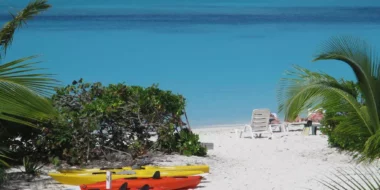
offers 3-7 night guided adventures featuring extraordinary kayaking, white
sand beaches, water with 50' visibility, multiple islands to explore,
blowholes, coral reefs, and an impressive variety of marine life.
Map
of Exuma/Getting
to Exuma/History
& Culture/Travel
Information/Things
to See & Do /FAQ's

|